
 Links
Links Feed
FeedThe Digital Rebirth of Utopia
Tuesday, April 11, 2006 → by Danieru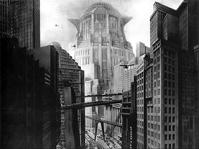 The ideal of 'the city' has stood as the most physically accessible representation of Utopia since the days of Plato's Republic; the mental playground from which philosophers and writers have played with the subject of human:
Plato (through Socrates) constructs an ideal "city in speech," a theoretical city of theoretically perfect justice. Yet Plato constructs this theoretical city not only to examine the most just city imaginable, but primarily to discover how individuals themselves should best live.Perhaps if Plato were around today he might perceive many of The Republic's theoretical boundaries alive and well in the real world cities which power our modern lives. In these hubs of reality society finds its purpose. Each human being, replete with desires known only to their subjective selves, becomes a neuron in the cerebral matrix of the city - emergent processes casting the collective thoughts of human culture out onto the world. Yet these awesome chaotic entities in their exponential growth towards progress have changed little in their fundamental conception for thousands of years. As matters of human culture, economy and the one on one interaction between people begins to slowly re-emerge anew in the data streams of the internet, so the physical city is about to find itself superseded and replaced. Yet, the concept of 'the city' as its own entity has altered little, if at all:
"The city is a human habitat that allows people to form relations with others at various levels of intimacy while remaining entirely anonymous."
 We now find this definition of the city fits equally well with communal hubs prevalent throughout the internet. As I noted in a previous post (Hyperreal Wikipedia...), active participation in these hubs by individuals from every corner of the globe is beginning to alter the nature of identity itself. Push back the hands of time as little as 10 / 15 years and the connections between members of society were relatively easy to draw. One could still 'join the dots' between people and find that physical relationships were generally mirrored by personal relationships. Yet the internet has dissolved this conception to nothing, for now the location of a human on planet Earth is in no way reflective of their connections with other human beings, with culture. The physical city as a nucleus of connectivity is under attack. Viral, hyperreal society is feeding on its substance. Yet the metaphor of the city is strong, even in virtual space:
One synthetic world, Second Life, offers no game-play as such but sells virtual real-estate that users can build almost anything on. One real-estate maven, 'Anshe Chung', a Chinese teacher based in Germany, is reported to make $150,000 a year buying, improving and reselling virtual homes in Second Life. Others have businesses designing virtual clothes or selling virtual advertising...
...When will synthetic worlds become economies worth reckoning with? They are already real, and are the fastest-growing economies in the world... - link
 The inhabitants of this new breed of 'virtual world' may focus aspects of their imagination on intergalactic battles or the slaughter of orcs and demons, but when it comes to interaction with other players the ideal city is still their hub of choice. The physical constraints of our real world are merely tweaked before being reborn in cyber-realities, and players' utopian imaginations have ventured little farther than the real world cities within which they now link themselves to the internet.
If the city is being copied brick for brick into virtual space, what will be the fate of the physical, modern metropolis our hyperreal culture finds refuge in? It appears its character is about to be shifted also:
...the Third-World metropolis is becoming the symbol of the new. This is all the more thrilling for its utter improbability: surely those suffocating piles of slums and desperation are too exhausted, too moribund, to bring forth futures? But it seems to me this is exactly what is happening. If, for the better part of the 20th century, it was New York and its glistening imitations that symbolised the future, it is now the stacked-up, sprawling, impromptu city-countries of the third world. The idea of the total, centralised, maximally efficient city plan has long since lost its futuristic appeal: its confidence and ambition have turned to anxiety and besiegement, its homogenising obsession has constricted the horizons of spiritual possibility and induced counter-fantasies of insubordination, excess, and life-forms in chaotic variety. Such desires flee the Western surveillance cameras and bureaucratised consumption to find in the Third World metropolis a scope, a speed, a more fecund ecology...
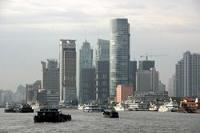
...Our fast-moving media culture, groping always for any image of the new that can be used to produce more astonishment, operates in a zone slightly ahead of knowledge. The rise of China may remain for many a fantastical rumour, but as the blind sense of such large-scale shifts accumulates, it becomes possible for the media to peddle a new form of futurism: a strange and dazzling hypermodernity that bewilders western understanding but that seems to harbour the plenitude of ideas and aspiration that the west no longer finds within itself... - linkPerhaps the multilayered chaos of the 'third-world' metropolis better reflects the cultural disorder we know to exist in our internet-savy psyche. Indeed, as the media has relished to show us of late, in one such third world country the first signs of mental absolution from objective reality have started to make themselves known. China's current economic boom in the physical world is shadowed by a subclass of its subjects for whom virtual economy, virtual identity and virtual relationships have the addictive capacity to overpower their connection with 'external' reality.
Could we be heading for a time when the physical city is nothing but row upon row of internet connectivity centres, bubbling as if from the urban decay of our once proud environments?
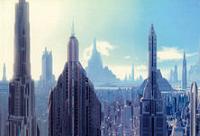 Digital reality seems to be able to provide a closer match to the Utopian ideals of its inhabitants. Could the perfect city paradise of Plato's Republic finally find a realistic set of foundations from which to compose itself? Real world metropolies have come to far exceed the depths of vision prevalent in the ideal city of Utopian fantasy - a credit to the capacities of cultural and technological evolution to outstrip any matter of thought the human is capable of. The shallow simulations of city hubs now manifesting themselves in cyberspace and the chaotic third world urban sprawls which offer their hand out to the Western imagination are where the future economies of civilisation will be built, balanced and maintained. Whether you choose to extend your cultural self in real or virtual cities is at present a matter of choice. But in the next few years, as the virtual city comes to fruition, the malleable aspects of your personality will be forced to take on ever more hyperreal qualities in order to keep up with the encroaching tide of virtual culture.
 To believe that these changes are the prelude to some transhumanist singularity is to miss the point that Utopia is what we strive towards, not something we can ever reach. Just as scholar and laymen alike glances at Plato's Republic with the arrogant foresight of 2000 years of change, so the hyperreal identities who inhabit the virtual cities of the future will stare back at our Utopian visions and laugh at our lack of imagination. If you really want to see how the future will look you only need look into the past, or reflect on the present.
 - Plato's ideal city begat Thomas More's Utopia begat Techno-Utopianism begat Hitler's Welthauptstadt Germania begat Post-Modern urban-design begat Ecumenopolis begat ... link ... link ... link ... link ...
- Related forum discussion: Utopias Я' Us
- We Make Money Not Art: Virtual Lives
Categories: Society, Future, History, Reality, Culture, Utopia, Technology, Simulacrum, Internet, Human, Singularity, Philosophy, Ideas


|
 Subscribe via RSS!


 Via Email


Here's to being the devil's advocate of shared idealism
April 17, 2006 5:46 AM
Post a Comment